Home / Performance Solutions
Your building may not need to start over.
Across Victoria, owners are being told the only road back to compliance is total cladding removal. Often it isn't. A Performance Solution is the NCC's own engineering-evidenced pathway, and Pro-Build Plus delivers it end to end, from invasive audit to surveyor certification.
01, The problem
The default reading says: strip everything.
Legacy aluminium composite panels, ACP with polyethylene cores, typically cannot satisfy the NCC's prescriptive Deemed-to-Satisfy provisions. Read prescriptively, the code leaves one answer: total removal.
The Deemed-to-Satisfy provisions are a recipe. Build the external wall this way, from these materials, and compliance is assumed. Materials that fail combustibility testing under AS 1530.1, as polyethylene-core ACP does, cannot follow that recipe. So the prescriptive reading lands the same way on almost every affected building: remove it all, whatever the configuration, whatever the elevation, whatever the actual risk.
After Lacrosse in 2014 and Grenfell in 2017, that caution is understandable. But it treats a lightly clad, fully sprinkler-protected office tower exactly the same as a heavily clad building with combustible panels stacked over its exits. The recipe cannot tell the difference between those two buildings. Engineering can.
For owners and owners corporations, the prescriptive reading means scaffolding the entire building and starting the façade again, a cost and disruption burden the building may not actually need to carry.
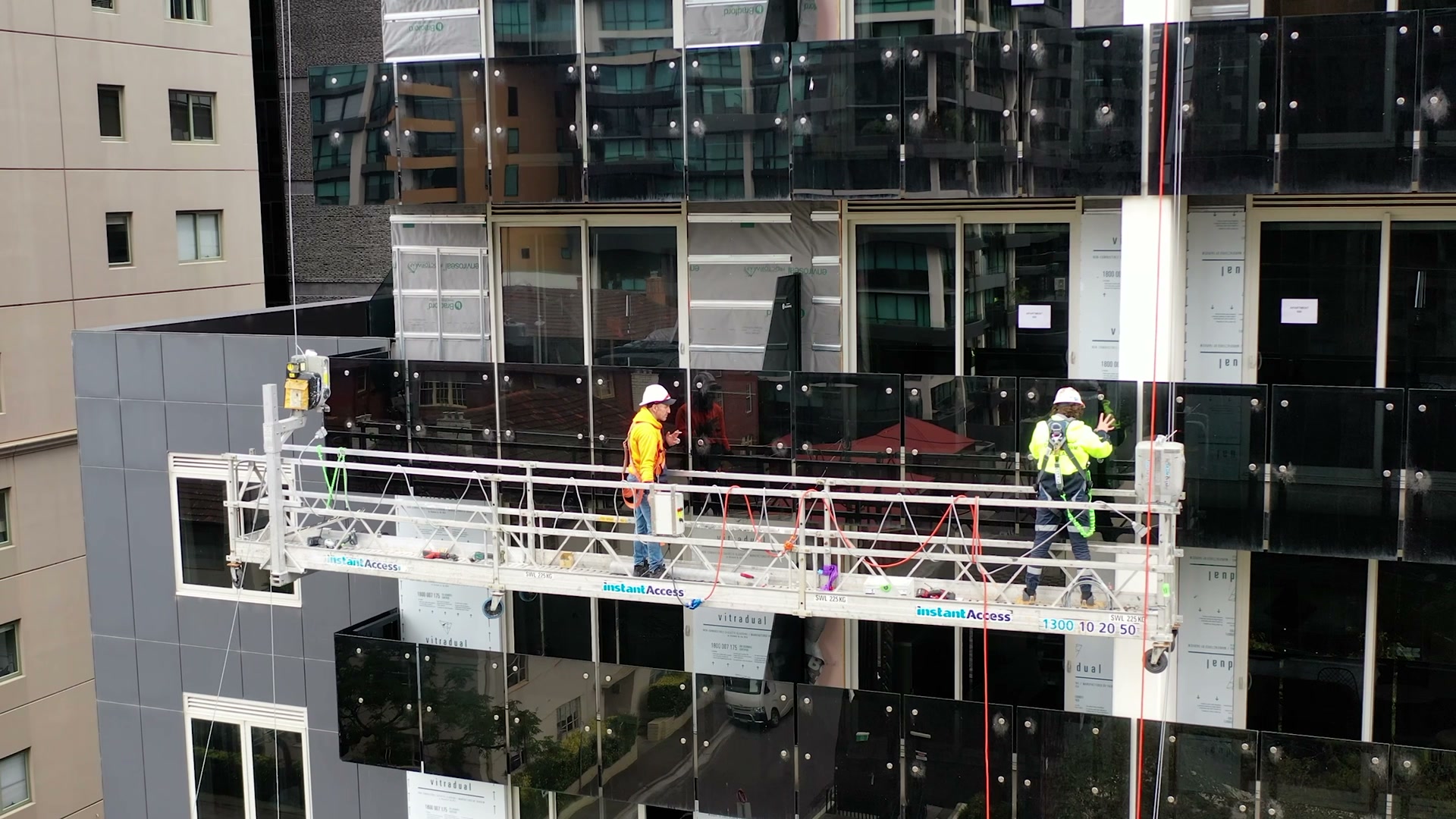 Full removal underway, swing-stage access
02, The insight
The NCC is not a recipe book. It is a performance-based code.
The mandatory part of the National Construction Code is its Performance Requirements. The Deemed-to-Satisfy provisions are simply one pre-approved way of meeting them, a safe-harbour recipe, not the law itself. A building that demonstrably meets the Performance Requirements is compliant. Full stop.
A Performance Solution demonstrates, through engineering evidence specific to your building, that the Performance Requirements are met without following the prescriptive recipe. The question changes from "does every panel pass the recipe?" to "does this building, as a whole system, deliver the safety the code demands?" For many Victorian buildings, the honest answer is yes.
03, Two pathways
Two roads to compliance. Only one starts from zero.
Both pathways end in a certified, insurable building. The difference is what happens to the parts of your façade that already perform.
Full replacement (DtS pathway)
Follow the recipe: remove every non-compliant panel and rebuild with systems that satisfy the prescriptive provisions.
- All combustible cladding removed, regardless of elevation, configuration or context
- Replacement with non-combustible systems that satisfy the Deemed-to-Satisfy provisions
- The right call when risk is genuinely widespread, and a pathway we deliver ourselves
- Full access programme across the building: scaffold, staging, occupant disruption
- The greatest cost and the longest programme, carried whether or not every elevation needed it
Performance Solution
Prove the building meets the NCC Performance Requirements through engineering evidence, and remediate only what genuinely needs it.
- Engineering-evidenced compliance against the Performance Requirements themselves
- Compliant-performing elements retained, not discarded by default
- Targeted remediation of genuine risk areas, not blanket removal
- Certified for acceptance by Victorian building surveyors
- Typically less cost and less disruption, because you are not starting over
A Performance Solution is the strategic justification for façade systems that do not comply with prescriptive NCC provisions. Properly engineered, it creates a certifiable compliance pathway without requiring an owner to start over.
The Pro-Build Plus position04, The evidence
What the engineering evidence can include.
A Performance Solution is only as strong as the evidence behind it. The fire engineer builds the case from the specific building in front of them, never from a generic argument about ACP in the abstract.
Building-specific fire engineering
A fire-engineering assessment of the actual building, geometry, occupancy, materials register and panel configuration, not an off-the-shelf opinion.
Sprinkler protection & detection
How sprinkler coverage and early detection change fire development, and the time they buy for safe evacuation and intervention.
Façade fire-spread behaviour
How the installed system behaves in a façade fire, informed by testing regimes such as AS 5113 full-scale façade fire propagation tests.
Cavity barriers & separation
The role of cavity barriers, vertical and horizontal separation, and panel layout in stopping a façade fire from travelling.
Evacuation context
Egress paths, travel distances and occupant profile, how the building actually empties under alarm, evidenced rather than assumed.
Brigade intervention
Fire-brigade access, attendance and intervention capability for the specific site, factored into the engineered outcome.
05, The certification path
From audit to certification, one accountable team.
Five stages, documented at every step. We coordinate the engineering, the stakeholders and the physical works under one roof, so the compliance position never falls between consultants.
Audit & materials register
Everything starts with knowing exactly what is on the building. Our invasive compliance audit produces a panel-by-panel materials register, the factual foundation every later stage stands on. If your building has not been audited, this is step one.
Start here, compliance auditsFire engineer develops the Performance Solution
A qualified fire engineer takes the audit data and builds the engineering case: how this building, as configured, meets the NCC Performance Requirements, and which elements need physical work for the case to hold.
EngineeringStakeholder alignment
Before a single panel moves, we bring the building surveyor, the owners, the insurer and, where relevant, Cladding Safety Victoria to the same documented position. Certifiers do not like surprises. Neither do we.
Surveyor · owners · insurer · CSVTargeted physical works
Our own crews carry out exactly what the engineering calls for: removal of genuine-risk panels, cavity barriers, separation works and compliant replacement where required, staged to keep the building operating.
ConstructionCertification & close-out documentation
The building surveyor certifies the Performance Solution, and we hand over the complete close-out package: the engineering report, the works documentation and a panel-by-panel audit trail your insurer can actually read.
Certification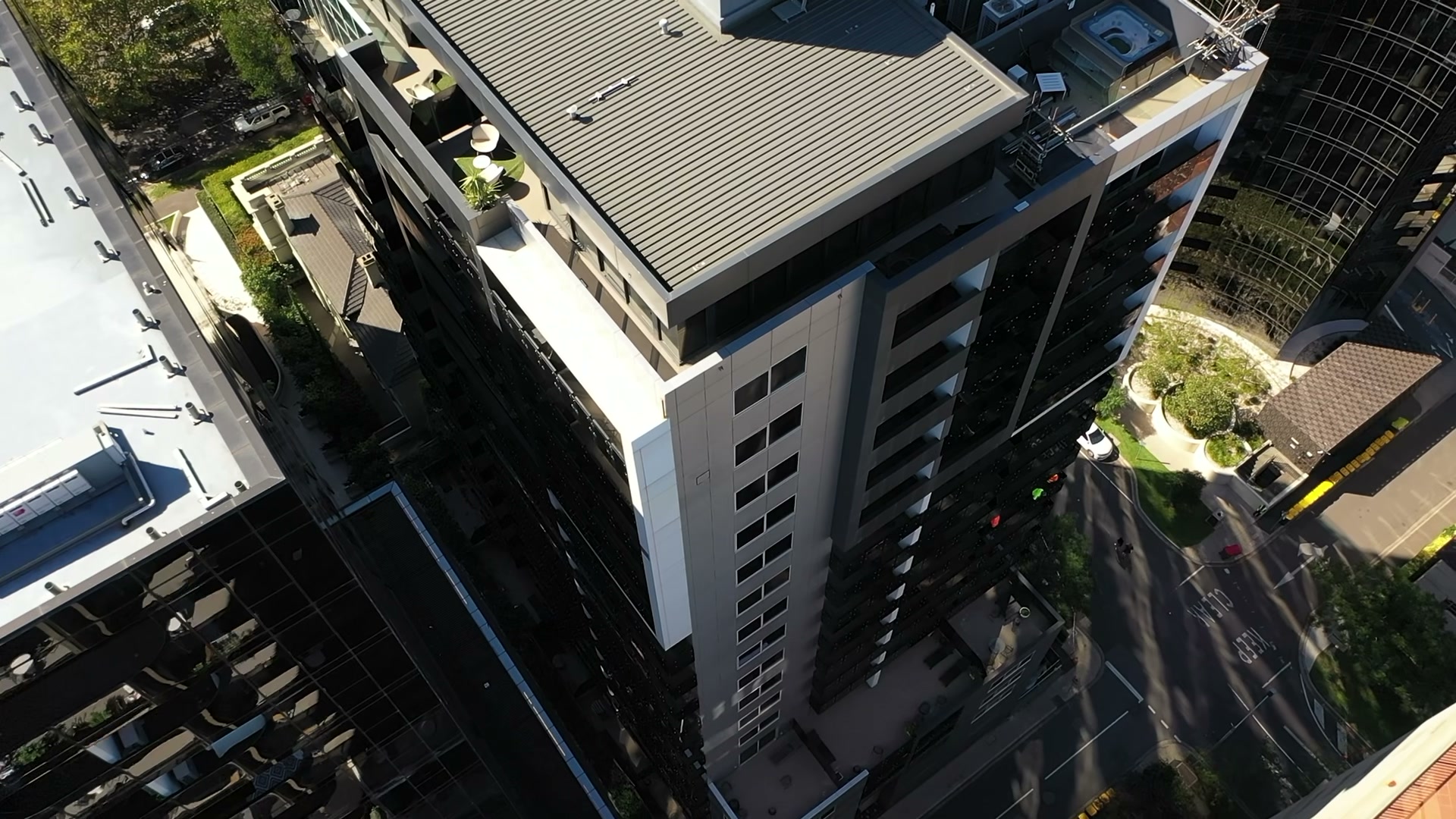 Targeted works, compliant panel installation
Performance Solutions sit at the high-stakes intersection of design, insurance and state regulation.
Our job is to hold all three to the same documented position, the fire engineer, the building surveyor, the owners corporation, the insurer and, where relevant, Cladding Safety Victoria, then build exactly what the engineering says and prove it, panel by panel.
06, Straight answers
When a Performance Solution is not the answer.
We are the same company that delivers full replacement, so we carry no bias toward either pathway, only toward the one your building can actually certify. Some buildings should not pursue a Performance Solution, and we will tell you so in the first conversation.
| The situation | Why the engineering struggles | What we will tell you |
|---|---|---|
| Heavily clad, high-risk elevations | Where combustible panels run extensively across high-risk elevations, over exits, near boundaries, stacked vertically, the engineering case for retention rarely stands up. | Strip it. We will scope a staged full replacement and stand behind that instead. |
| Sprinkler-less buildings with poor egress | Performance arguments lean heavily on suppression, detection and evacuation. Where a building lacks sprinklers and its egress is poor, there is little left to build a case on. | The prescriptive pathway is the honest one, and we will say so before you spend anything on engineering. |
| Insurers demanding full removal | Occasionally an insurer's position settles the question regardless of the engineering. A certifiable pathway that no one will insure is not a pathway. | We engage your insurer first. If their answer is fixed, you will know before the engineering begins. |
That honesty costs us Performance Solution engagements from time to time. It also means that when we do recommend the pathway, the recommendation is worth something. Whichever road your building takes, removal, replacement or a Performance Solution, it is the same accountable team, and the same panel-by-panel documentation at the end.
07, FAQ
Performance Solutions, answered straight.
The questions owners, owners corporations and facility managers ask us most, answered the way we answer them in the room.