Home/Cladding after CSV
CSV has closed. The obligation hasn't.
Cladding Safety Victoria wound up in May 2026. Its functions moved to the new Building and Plumbing Commission. The duty to fix combustible cladding has not changed. Only the funding has.
01, What changed
The program is over. The problem isn't.
Cladding Safety Victoria is gone. What remains is every building it never paid for.
In May 2026 the Victorian Parliament passed the legislation that wound up Cladding Safety Victoria. Its functions moved to the Building and Plumbing Commission, the state's new consolidated building regulator. The funded rectification program closed with it.
The program did its job for the buildings it covered: more than 1,600 rectified, around 83,000 homes, and over 99 per cent of the highest-risk buildings reported done. But it only ever funded the highest-risk residential buildings. Everyone else received a pathway, not a cheque.
A building notice does not lapse because an agency closed. Enforcement moved to the Building and Plumbing Commission. The obligation stays with the owners.
Victoria, after May 202602, Who must act
Four groups still carry the duty.
The closure of CSV changed who administers cladding risk, not whether you must deal with it. Four groups still carry the duty and the bill.
Lower-risk residential
Apartment buildings assessed as lower risk received risk mitigation pathways, not funded rectification. They act through the Cladding Remediation Partnership Program, alongside the department and their council. It coordinates. It does not pay.
Hotels and Class 3
Hotels, student accommodation, boarding houses and care facilities of three storeys or more sit inside the same program. Operators fund their own works.
Public buildings
Public and assembly buildings of two storeys or more are in scope as well, with the same surveyor letters and the same self-funded obligation.
All commercial buildings
Offices, retail and industrial were never covered by the residential program. Commercial cladding has always been private-pay, enforced through audits, notices and insurance renewals. Only the scrutiny has grown.
03, Notices
The letters keep arriving.
Municipal building surveyors are issuing Letters of Action, directing owners of cladding-affected buildings to act through the partnership program. A Letter of Action is not junk mail. It is the step before formal enforcement.
Building notices and building orders remain live instruments, issued by council surveyors and backed by the new commission. An unresolved notice brings interim measures, fire watch, upgraded detection, access restrictions, all costing money every month the decision is deferred.
Already holding a notice or a Letter of Action? Start with our building notice response page or call 1300 800 727 now.
04, The money
When owners pay, the numbers get personal.
Three pressures push committees to act now.
- Special levies for unfunded rectification are reported at $50,000 to $200,000 per apartment
- Owners corporation insurance premiums have risen steeply for years, with annual rises of 30 to 50 per cent reported, and unresolved cladding carries the heaviest loadings and exclusions
- Claims against original builders face limitation periods of about six years, and for most affected buildings that window is closing or shut
Rectification is no longer just a compliance cost. It is what helps a building become insurable, saleable and finished in the eyes of a regulator. The certified close-out is the document everything else re-prices against.
05, The pathway
The framework prefers engineered mitigation. So do levies.
The Cladding Risk Mitigation Framework, which the partnership program runs on, prefers solutions that address cladding risk without fully removing the cladding, where possible. The state's default is engineered mitigation, not automatic full recladding.
That is exactly the work we deliver as Performance Solutions. A fire engineer assesses the building as a system. Compliant portions are retained. High-risk material is replaced where the engineering demands it. The building surveyor certifies the outcome, documented panel by panel.
For a committee staring at a six-figure levy, a targeted engineered scope is often the difference between a levy that passes at the AGM and one that fails. Not every building qualifies, and we say so plainly when one does not.
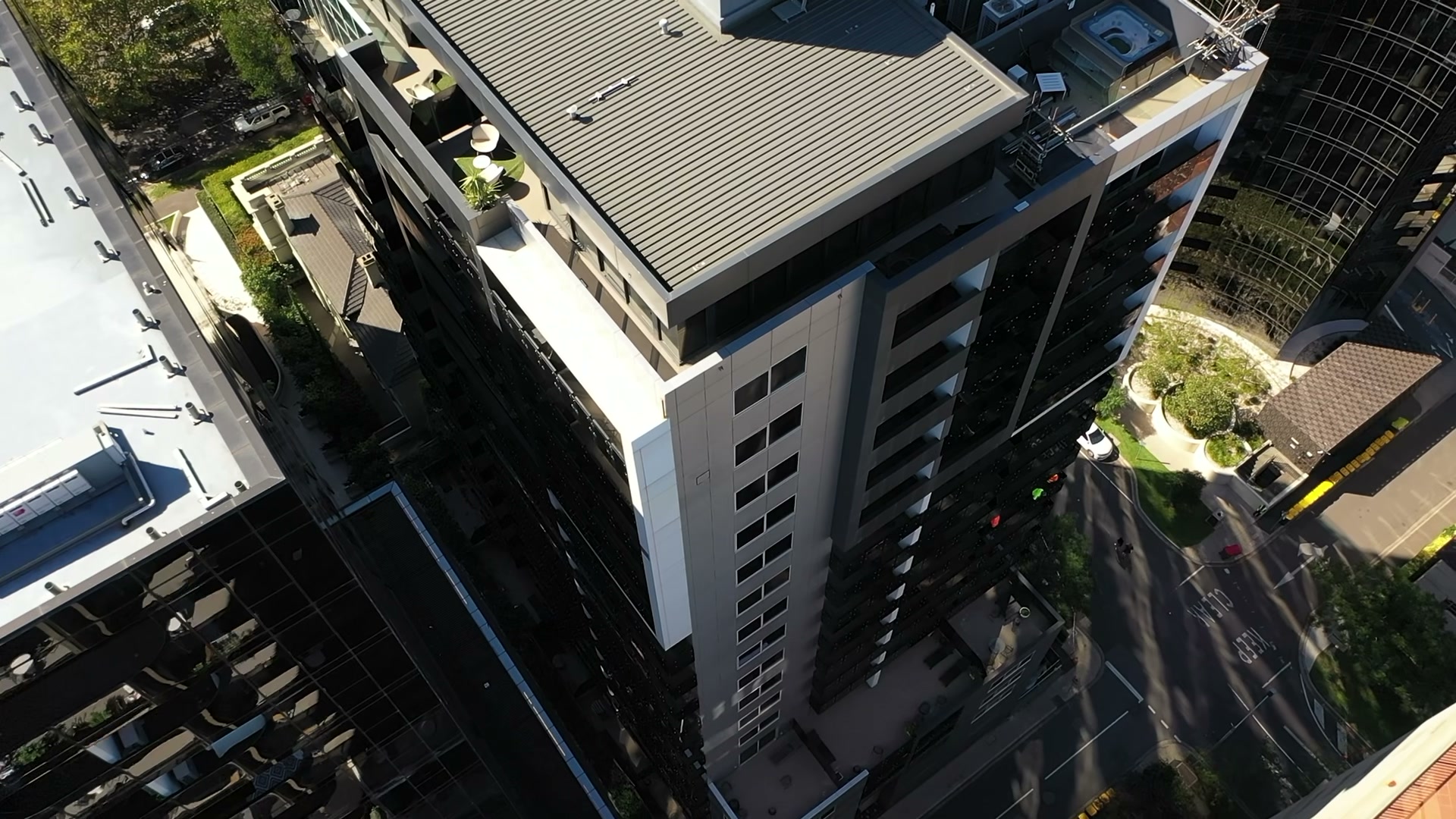
We already deliver privately funded, certified remediation on occupied buildings. At Wellington Parade in East Melbourne we removed combustible cladding from an occupied residential high-rise and installed a certified non-combustible system, without displacing a single resident. The same discipline ran through 200 Queen Street, Wesley College, Monash Caulfield and a Truganina data centre.
 Engineered remediation · certified close-out
06, Project review
What a project review covers.
One call with a senior specialist starts it. Here is what we work through.
- Your documents: audit reports, notices or Letters of Action, fire engineering, drawings, past quotes
- Your building: the systems on the wall, ACP or EPS, their extent, fixings and access
- The pathway: engineered mitigation or full replacement, answered honestly
- The numbers: staged scope and cost your committee can table at the AGM
- The close-out: what your surveyor and insurer will need to see, planned from the start
07, FAQ
Straight answers on cladding after CSV.
The questions committees, strata managers and asset owners are asking since the wind-up, answered straight.